





Healthcare Integration for Startups: A Scalable Guide to EHR Interoperability
In this Article
Healthcare startups face a tough but common challenge: integrating with Electronic Health Record (EHR) systems – quickly, securely, and at scale. It’s a complex and highly regulated process that often slows progress. But smooth integration is essential for launching products, exchanging health data, and creating real value for both providers and patients.
If you’re navigating this interoperability maze, you’re not alone. This guide breaks down key challenges, outlines practical solutions, and shares scalable strategies to help you move faster and stay focused on growth.
Whether you’re building a virtual care app, a remote patient monitoring tool, or a Healthcare AI Platform, understanding EHR integration is critical for long-term success.
Why Healthcare Integration Is So Difficult
The Health IT Landscape Is Fragmented
There are dozens of EHR vendors in the market, and they all speak slightly different technical languages. They may support some versions of HL7v2, CCDAs, APIs or FHIR, but only across certain use cases, and with wide variation in message consistency.
Without consistent standards to rely on, startups often find themselves building one-off integrations for every customer. That adds complexity – and cost – fast.
Limited Engineering Resources
Early-stage Health Tech teams usually focus on product features, not on managing dozens of backend data connections. This makes custom EHR integration a heavy lift with a big opportunity cost. As the demand for integrations grows, time-to-market can suffer and engineering bandwidth gets stretched thin.
Compliance Is Non-Negotiable
Healthcare is one of the most regulated industries in the U.S. Any time you’re exchanging patient data, you need to comply with HIPAA, HITECH, and a growing list of other privacy and security rules. This requires secure, compliant interoperability from day one.
The Smarter Way: Use a Healthcare Integration Platform
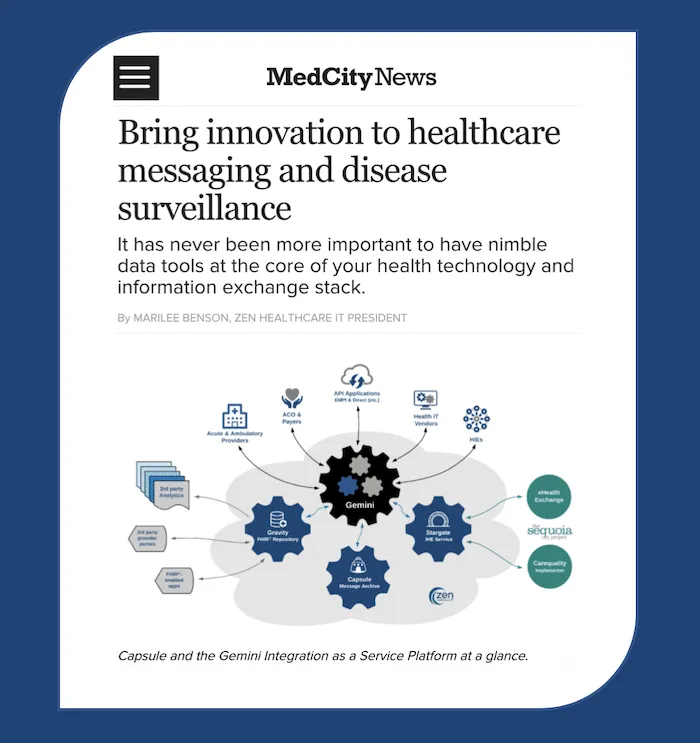
To bypass the chaos of custom integrations, many startups turn to healthcare integration platforms. These platforms act as middleware – sitting between your product and external EHRs or national networks – to simplify connections and standardize data exchange.
A solid integration platform can:
- Support a variety of different messaging standards
- Securely transmit health data using trusted protocols
- Handle authentication (OAuth2, API keys, VPNs, Certificates)
- Support real-time and asynchronous data flows
- Have some sort of alerting when things go wrong
But – “solid” isn’t always good enough.
The best integration platforms will also:
- Support both direct “point to point” and national network type connectivity
- Automatically translate between data formats like CCDA ⇄ FHIR and HL7v2 ⇄ JSON
- Provide 2-Factor Authentication to protect PHI
- Give your team a “familiar” user interface when you want to be hands on
- Provide networking & secure connectivity support (VPN, Tokens or Certs)
- Offer robust interface level monitoring and alerting, with Dashboards
- Provide a fully hosted and managed solution that is HITRUST CSF r2 Certified
- Provide an expanded interoperability team when you need it. A platform without access to interoperability expertise is incomplete, and shifts more cost to you.
By using a platform built for healthcare messaging, Health Tech startups reduce the engineering burden, launch faster, and gain built-in compliance and security features. Plus, you can reuse interfaces across multiple clients and get quicker access to national health data networks.
What to Look for in a Healthcare Integration Platform
Not all platforms are created equal. Here are five must-haves when evaluating integration solutions:
Read more